Menu
Interventional radiology, commonly known as IR, is the practice of using medical imaging to guide minimally invasive surgical operations for the diagnosis, management, and treatment of various illnesses. Fluoroscopy, MRI, CT, and ultrasound are some of the imaging techniques used. These radiologists work in the vascular and interventional radiology division of UVA Health System.
Interventional radiologists use needles and catheters to treat diseases inside the body through tiny incisions, typically in the abdomen. They use medical imaging to guide their catheters through arteries, blood vessels, and organs.
How Interventional Radiology Procedures Work
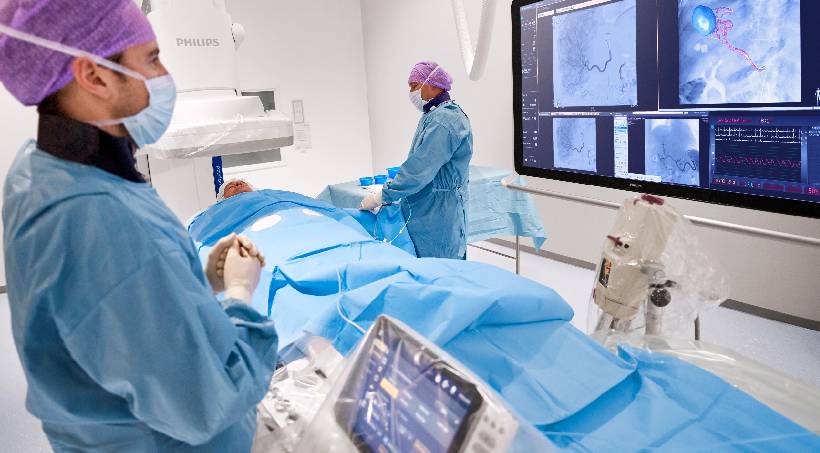
During a typical IR procedure, the patient lies on an operating table with a specialized X-ray camera—a fluoroscope—positioned above. The radiologist wears appropriate safety gear, including a blue gown and mask. While watching the projected medical images on the screen, they guide needles and wire-like instruments through the patient’s body. It is remarkable how medical imaging allows them to precisely locate their instruments.
Why Interventional Radiology?
Patients who might normally require open surgery can avoid costly, painful, and risky procedures by using interventional radiology. As a result, IR has replaced other treatment options for many illnesses. The range of therapies that IR can deliver is continually evolving and expanding.
Cancer and other conditions can be identified and treated using interventional radiology without the need for extensive surgery.
With IR, doctors use imaging tests like ultrasounds, CT scans, or MRIs to look inside the body. They then perform procedures or administer treatments using tiny instruments such as tubes and needles through microscopic openings that may be as small as a pinhole.
Interventional Radiology for Cancer
Interventional radiology aids in cancer treatment in numerous ways. It can reduce pain, manage side effects of cancer treatment, stop bleeding during surgery, and directly target the disease.
Using IR, doctors can deliver treatments like chemotherapy and radioactive medications directly to tumors and cancer cells.
They can also destroy tumors or cancerous cells by heating them with radio waves, electric currents, or ice crystals. Another method involves cutting off the blood supply to tumors.
Interventional radiologists can also manage side effects of cancer treatment such as blood clots and fluid retention in the body.
7 Orange Multi-Specialty Hospital